September 19, 2026 Post by : Editorial Indoor Growing
Companion Planting With Hyacinths in the Spring Garden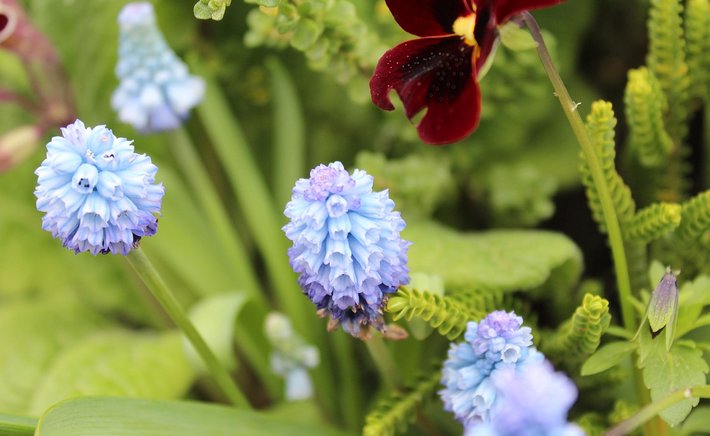
Walk into any garden center in early autumn and you will see bins of hyacinth bulbs, each promising fragrant blooms in shades of pink, blue, white, and purple. But if your plan is to grow them indoors on a windowsill or in a forcing vase, the variety you choose matters more than most people realize. Some hyacinths force quickly and reliably, while others sulk, stretch, or produce floppy stems that collapse under the weight of their own flowers.
The good news is that the classic Dutch hyacinth, Hyacinthus orientalis, is the backbone of indoor forcing and almost every variety you find in a bulb bin belongs to this species. Within that group, though, there are meaningful differences in bloom time, stem strength, and how well each one tolerates the warm, dry air of a typical home.
Look for Varieties Bred for Forcing
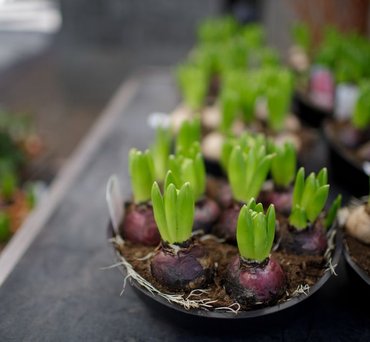
Bulb suppliers often label certain hyacinths as "prepared" or "for forcing." These bulbs have been heat-treated during storage to trick them into thinking they have already been through a cold winter, which shortens the chilling time they need before they will sprout and bloom. If you see that label, grab it. Prepared bulbs are the safest bet for indoor growing because they are less likely to rot during the chilling phase and tend to bloom more uniformly.
If you cannot find prepared bulbs, standard hyacinths will still work, but you will need to give them a longer cold period, usually ten to twelve weeks in a dark, cool spot like a refrigerator or an unheated garage. Varieties such as 'Delft Blue', 'Pink Pearl', 'White Pearl', and 'City of Haarlem' are time-tested favorites that perform well both indoors and out. They are widely available, affordable, and forgiving of minor mistakes.
For something a little different, consider the multiflora types, which produce several smaller flower spikes from a single bulb rather than one dense truss. They are charming in small pots and less likely to topple over, though the individual blooms are smaller and the fragrance is more subtle.
Match the Variety to Your Space
Think about where the hyacinth will actually live once it starts growing. A sunny south-facing windowsill will push growth fast, which can lead to weak, stretched stems if the plant does not get enough light. A cooler spot with bright indirect light is usually better, especially during the first week or two after the shoots emerge. Compact varieties with shorter stems tend to hold up better in these conditions.
Fragrance is another factor worth considering. Hyacinths are famously perfumed, and while some gardeners adore the scent, others find it overwhelming in a small room. If you are sensitive to strong smells, choose white or pale pink varieties, which tend to be milder, and keep them in a well-ventilated area rather than a closed bedroom. A single pot on a kitchen counter is often the perfect compromise.
Finally, do not overlook bulb size. Larger bulbs store more energy and produce fuller flower trusses, so if you are choosing between a bargain bag of small bulbs and a slightly pricier bag of top-size ones, the bigger bulbs are almost always worth it for indoor forcing. You will get a more dramatic display and a better chance of success on your first try.

Author

22 feb,2025
This incident opened my eyes to the value of Insurance in general, so I decided to examine my personal and business insurance.
Comment (3)
The payments are made directly from one person to another without passing through a central bank or clearing house.
22 feb,2025
ReplyWhy Your Hyacinth Leaves Are Turning Yellow
23 feb,2025
ReplyCompanion Planting With Hyacinths in the Spring Garden
23 feb,2025
Reply